Innovative Approaches to Residential and Commercial Paving and Concrete Projects

Key Takeaways:
- New technologies and materials are transforming the paving and concrete works.
- Green practices are becoming normal in the business.
- The superior methods of design improve functionality and looks.
Table of Contents:
- Sustainable Paving Solutions
- Smart Technologies in Paving
- Decorative Concrete Techniques
- Roller Compacted Concrete (RCC)
- Probabilistic Digital Twins in Geotechnical Design
- Adaptive Reuse in Construction
- Blockchain in Construction Payments
- Conclusion
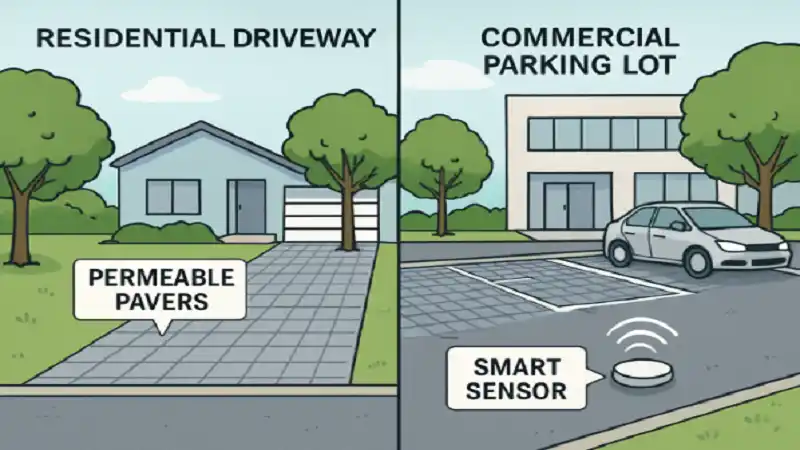
The residential and commercial paving project is in a technological revival wherein modern materials and online technologies are establishing new standards of performance and sustainability. Permeable surfaces, energy-efficient pavements, and smart sensors are some of the new forms of innovation that are changing the manner in which we design, build, and maintain paved infrastructure. Locally, professional expertise from Clark, NJ, paving companies demonstrates how these advancements are being put into practice to deliver lasting and beautiful projects.
With the industry shifting to a more eco-friendly and smarter approach, the owners of the projects will now have to anticipate better durability and beauty, as well as less environmental harm and higher cost-effectiveness. With such progress, property owners are getting the ability to make informed, future-proof investments within their spaces. The focus on sustainable building and the introduction of innovative technologies leads to strong infrastructures, healthier cities, and a large long-term premium.
These changes within the industry are indicative of a more general realization that paving and concrete construction can and should be used to facilitate water management, reduce carbon emissions, and provide friendly public and private environments. The decision-makers are also more focused on the projects that are characterized by permeability and recycled material and little maintenance, which are establishing new trends in residential driveways and commercial developments.
Moreover, the unification of innovative technologies and artistic methods also led to the possibility of individual ones, as well as more innovative asset management, which takes into account the modern needs of beauty as well as functionality.
Sustainable Paving Solutions
Modern paving has turned into a guide in the concept of sustainability. When the surface is porous, like porous asphalt and pervious concrete, the water will absorb its way into the underlying soil, and surface runoff and flood risk will be reduced significantly. These systems not only replenish the aquifers but also filter pollutants before they are allowed to enter the natural waterways to facilitate cleaner urban waterways.
The use of waste materials like fly ash, slag, etc., in concrete mixes is a material that not only serves to divert wastes in landfills but also lowers the total carbon footprint of construction works. The materials enhance durability and life cycle operations and help save virgin resources, which is one of the major components of environmentally responsible paving and building.
Smart Technologies in Paving
The current technological developments have brought a new wave of paving system intelligence. The intelligent pavements being used are fitted with embedded IoT sensors that keep a constant check on the surface temperature, humidity, and even traffic congestion. These live data points can predict maintenance and act in time to maximize pavement life and reduce disruptions. Certain innovative surfaces can warm themselves to avoid the formation of ice to improve the safety and accessibility during the winter season.
New technologies in paving are also essential in managing the assets to simplify the process through offering insights that can be acted upon by the municipalities and businesses. This allows the stakeholders to determine the areas of problems and designate maintenance resources in a more efficient way, which will eventually result in lowering the cost of repairs and reducing the level of service disruptions.
Decorative Concrete Techniques
Aesthetic value is no longer required to be compromised in terms of price or longevity. Decorative concrete is also the source of creative expression in residential and commercial environments, using numerous inventive methods. Stamped concrete can mimic the appearance of natural stone, brick, or tile and turn otherwise depressing surfaces into features at driveways, patios, or entry points. The finishes are also stained and polished, with a wide range of colors, and are sophisticated and visually appealing at a reasonable cost.
Not only are these decorative options appealing to the eye, but they are also designed in a way that they are durable and would be an excellent solution in high-traffic areas. In particular, exposed aggregate finishes are used widely to give texture, be slip-resistant, and have a polished appearance that will resist time.
Roller Compacted Concrete (RCC)
Roller-compacted concrete (RCC) has become one of the most trustworthy and economical options to choose for the pavement of high usage. Its special construction, such as a drier concrete mix pressed with rollers, provides high compressive and low maintenance requirements. RCC is also quite appropriate in industrial areas, car parks, and roads where quick construction and stability of performance are compulsory. The reduced curing time implies that the surfaces can be put into service soon after being laid, thus minimizing the delay of the project.
Probabilistic Digital Twins in Geotechnical Design
Digital twins Digital twins are virtual representations of physical objects that are used more frequently in geotechnical engineering to include uncertainties in the behaviour of the soil and the conditions of the site. The models are developed using probabilistic techniques and are updated as data accumulates, reflecting the occurrences that happen in the real world and providing a more accurate and safer design choice. This will ensure the development of a powerful risk management framework that can be adjusted throughout the project lifecycle and assists engineers in the optimal use of materials and in reducing the chances of unforeseen and expensive surprises during or after the construction.
Adaptive Reuse in Construction
Adaptive reuse is changing the old or poorly utilized spaces to a successful new use, which has provided an alternative to demolition and new construction. The plan involves transforming structures such as warehouses and former offices into homes, shopping malls, or social amenities. Adaptive reuse minimizes the number of materials used and materials thrown away during construction, and introduces new life in urban zones and places where the balance between modern functionality and architectural tradition is created.
Blockchain in Construction Payments
Construction payment operations have always been tedious and prone to controversies. With the introduction of blockchain-based systems and smart contracts, the payment is automated too after verifying the project milestones, removing numerous manual errors and delays. Through the association of building information modeling (BIM) and digital project records, the transparency of payments made and efficiency are greatly improved to the advantage of all the parties concerned and to deliver the deliverables within the required time.
The use of blockchain in the construction sector not only contributes to a higher level of trust, but it also helps the sector comply with the changing legal and financial regulations, which precondition the creation of a more transparent, streamlined industry.
Conclusion
Innovative technology, sustainability, and creative design of residential and commercial paving and concrete projects is the way to the future. Through leakages and waste recycling to smart and intelligent assets and open payments, the current developments are stipulating new benchmarks. Through such innovations, paving experts and land owners can deliver permanent and ecologically sustainable results, which would contribute to the creation of stronger, nicer, and more responsible communities.
Key Takeaways: New technologies and materials are transforming the paving and concrete works. Green practices are becoming normal in the business. The superior methods of design improve functionality and looks. Table of Contents: Sustainable Paving Solutions Smart Technologies in Paving Decorative Concrete Techniques Roller Compacted Concrete (RCC) Probabilistic Digital Twins in Geotechnical Design Adaptive Reuse…